

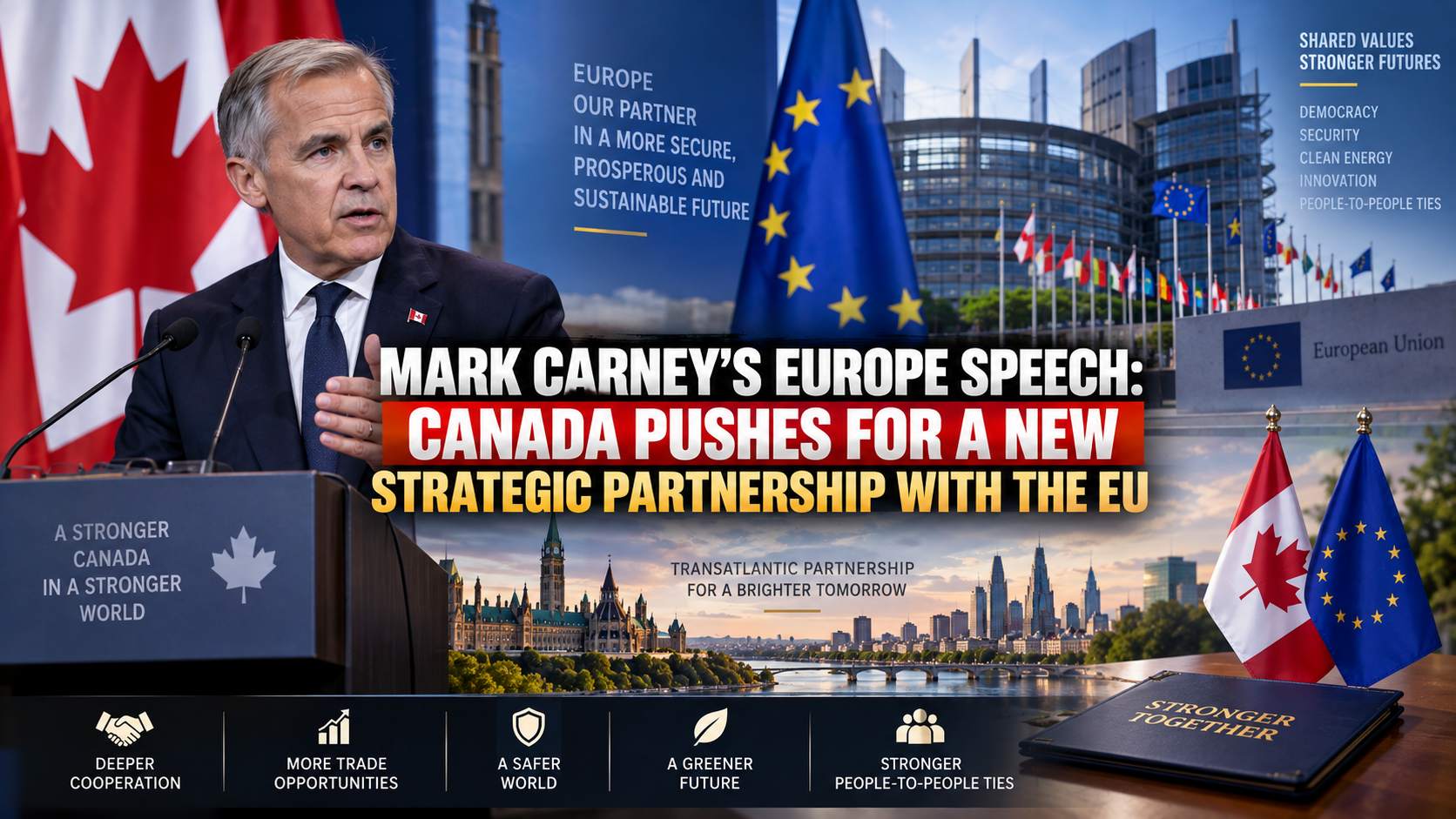
Canadian Prime Minister Mark Carney used his address to the European Parliament in Strasbourg to outline something much bigger than a new trade arrangement.
His message was that Canada and Europe need to become more closely connected at a time when trade, technology, energy supplies and national security are increasingly intertwined.
Speaking on September 17, Carney welcomed the European Union’s proposal to explore making Canada its first “associate member” and called for a broad strategic partnership covering critical minerals, defense, artificial intelligence, energy, space, digital trade and financial services.
But there is an important distinction. Canada is not seeking full EU membership, and “associate member” is not currently an established EU membership category. The idea would have to be developed and defined by Canada and the EU.
That makes Carney’s speech less about joining Europe and more about building a new framework for cooperation.
Carney’s Central Message: Resilience Over Self-Sufficiency
One of the clearest themes in Carney’s speech was sovereignty.
He argued that countries can no longer think about sovereignty simply as being able to produce everything domestically. Instead, he said, resilience comes from having dependable partners and diversified sources of essential goods, technology and capital.
“Collective resilience” was therefore at the heart of his argument.
Carney pointed to a world where supply chains can become vulnerable, tariffs can be used as economic pressure and financial systems can become tools of geopolitical influence. He also warned that technology is changing warfare, economies and the ability of governments to regulate their societies.
His solution was not isolation.
It was cooperation between countries with complementary strengths.
Why Canada and Europe See Strategic Value in Each Other
Canada has resources that Europe needs, while Europe has industrial and technological capabilities that can help Canada develop those resources further.
That creates an obvious economic connection.
Carney highlighted Canada’s energy resources, critical minerals, Arctic geography, AI and quantum capabilities, financial sector and access to both the Atlantic and Pacific.
Europe, meanwhile, brings a huge consumer market, advanced manufacturing, research capabilities, regulatory influence and a growing defense-industrial base.
The argument is straightforward: rather than each side trying to build every capability independently, they can connect their existing strengths.
That could become particularly important for critical minerals used in batteries, semiconductors, electric vehicles and defense equipment.
Critical Minerals Could Become a Major Part of the Relationship
Carney placed critical minerals near the center of his proposed partnership.
Canada has deposits of more than 34 critical minerals, according to the Canadian government, while Europe is seeking more secure supply chains for materials needed in advanced manufacturing, clean technologies and defense.
The challenge, however, is not simply finding minerals in the ground.
Mining is only one part of the supply chain. Processing, refining, transportation and manufacturing are equally important.
Carney proposed using the relationship to connect Canadian resources with European processing and industrial capabilities.
If developed successfully, such cooperation could allow both sides to reduce their dependence on concentrated global supply chains.
Energy Is Another Piece of the Puzzle
Energy security was another major part of Carney’s proposal.
He said Canada could contribute liquefied natural gas and hydrogen to European energy security, including through expanded infrastructure on Canada’s eastern coast and in the High North.
That proposal comes as European countries continue to think about how to secure reliable energy supplies while also pursuing longer-term transitions toward cleaner energy.
Canada’s geographic position gives it access to both the Atlantic and Pacific, although turning potential resources into large-scale exports still depends on infrastructure, investment and commercial demand.
In other words, the opportunity exists, but the partnership would require substantial projects rather than political statements alone.
AI Is Becoming Part of Foreign Policy
Perhaps one of the more modern elements of Carney’s speech was his focus on artificial intelligence and computing power.
He proposed that Canada and Europe cooperate on AI safety protocols, common standards and transparency while also developing practical AI applications.
He also discussed building additional sovereign computing capacity.
That reflects a wider shift in international politics. Computing infrastructure, advanced chips, AI models and data are increasingly treated as strategic assets rather than simply technology-sector issues.
For Canada and Europe, cooperation could therefore extend beyond traditional trade into the infrastructure needed to compete in the digital economy.
Defense Cooperation Could Expand
Defense was another major pillar.
Carney called for deeper cooperation in defense-industrial capacity and noted Canada’s participation as the first non-European member of the EU’s SAFE defense procurement program.
The proposed relationship could therefore involve more than military diplomacy.
It could also mean closer industrial cooperation, joint procurement, supply-chain coordination and production of defense equipment.
This is particularly relevant as European governments increase attention to defense capacity and supply security.
Digital Trade and People-to-People Links
Carney also proposed moving toward “seamless” digital trade in non-agricultural goods and services.
The idea would be to make it easier for companies operating between Canada and Europe to conduct digital business across the Atlantic.
He went further by proposing stronger links for students and young workers.
Carney suggested Canadian participation in Erasmus+ and deeper research cooperation through Europe’s next-generation Horizon program.
Such initiatives may appear less dramatic than defense or critical minerals, but they can have a long-term effect by creating business, academic and professional networks between the two regions.
The Arctic Adds Another Strategic Dimension
Canada and Europe also share an increasingly important geographic interest: the Arctic.
Carney referred to Canada’s Arctic geography as one of its strategic strengths.
As the Arctic becomes more accessible and strategically important, questions surrounding shipping, energy, infrastructure, communications and security are becoming increasingly relevant.
Canada’s position could therefore give Europe another reason to deepen its relationship with Ottawa.
The Arctic is no longer viewed only through an environmental lens. It is increasingly connected to trade, resources and national security.
What About the United States?
The timing of Carney’s speech inevitably places Canada-EU relations against the backdrop of Canada’s strained relationship with Washington.
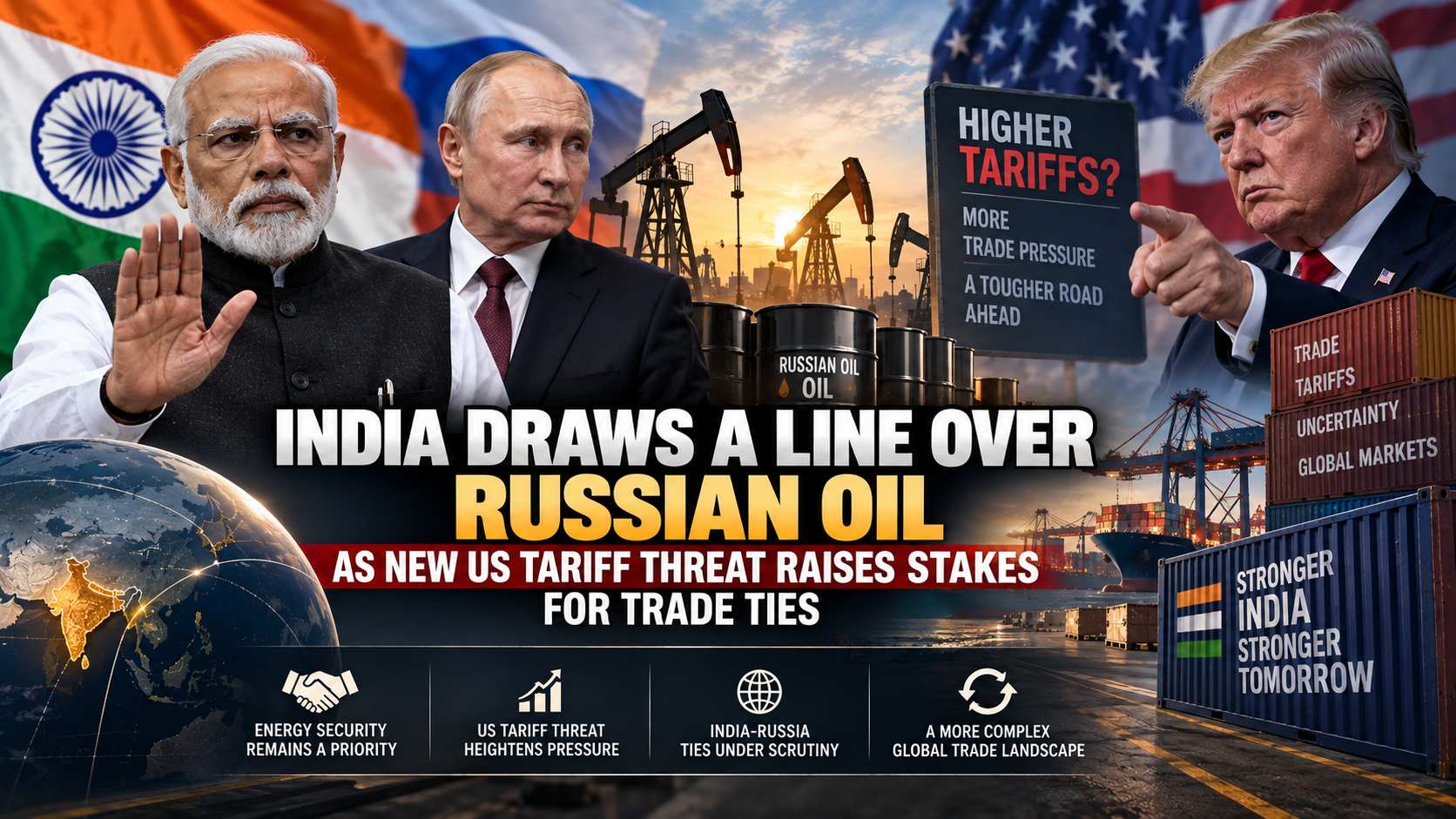
U.S. President Donald Trump has criticized the proposed Canada-EU arrangement and threatened possible tariffs if he considers it hostile to the United States. Reuters reported that Trump’s response came shortly before Carney addressed the European Parliament.
Carney, however, did not frame his proposal as an anti-American alliance.
Instead, he repeatedly described the proposed relationship in terms of resilience, sovereignty and cooperation among democracies.
That distinction matters.
Canada remains deeply economically connected to the United States, while Europe also has extensive economic and security ties with Washington. A stronger Canada-Europe relationship therefore does not automatically mean the creation of a replacement bloc.
It could instead give Canada another major strategic and economic partner.
From Trade Agreement to Broader Alliance
Canada and the EU already have the Comprehensive Economic and Trade Agreement, or CETA.
Carney’s argument is that the existing relationship has not kept pace with changes in the international environment.
The proposed next stage would therefore go beyond tariffs and market access.
It would connect trade with energy, defense, technology, minerals, finance, education and infrastructure.
That is why the phrase “associate member” has attracted so much attention even though its exact legal meaning has yet to be established.
The substance of the proposed relationship may ultimately matter more than the label.
The Bigger Story Is Canada Diversifying Its Options
Carney’s Strasbourg speech can be understood as part of a broader effort to make Canada’s economy and security relationships more diversified.
For decades, Canada’s economic relationship with the United States has been exceptionally important. Europe now appears to be offering Ottawa a way to expand another major strategic relationship.
Whether that becomes a formal “associate membership,” a new treaty arrangement or a collection of deeper agreements remains to be determined.
Carney’s speech nevertheless made his direction clear.
Canada wants stronger connections with Europe in the areas that will shape the next decade: energy, critical minerals, technology, defense, finance, digital trade and the Arctic.
The challenge now moves from rhetoric to implementation.
Building mines, processing facilities, ports, digital networks, research partnerships and defense-industrial links takes years of investment and negotiation.
But that is precisely what makes the Strasbourg speech significant. It was not simply about where Canada fits politically.
It was about how Canada intends to build enough economic and strategic connections that pressure from any single partner does not determine all of its choices.
For Ottawa and Brussels, the next question is no longer whether they can cooperate more closely. It is how far they are prepared to take the idea.





Leave a Reply